Want to be in the loop?
subscribe to
our notification
Business News
VN CARGO CARRIERS FACE TOUGH TARGETS
With advantages including its geographic position and a long coastline, the target is seen achievable, but it is difficult to turn the plan into reality because transportation of the country's exports are in the hands of foreign carriers.
The warning about losses in the market share of sea transport activities has been voiced for many years but domestic businesses have seen no active changes.
The Vinamarine says that foreign fleets have taken advantage of offshore routes because they have a global network and a long-term prestigious trademark, which makes it easier for them to find clients.
As for Vietnamese businesses, the required conditions of their ships or skilful crews to conduct long trips on the sea is not a problem, but only if the fleets receive profitable orders to transport goods both ways. As of now, they only receive orders to transport goods to foreign shores, but none to bring back.
Dues to this, no fleet dares to transport goods, because it is a loss-making operation.
This is also because of the long-term habit of many cargo owners who often buy goods based on the CIF (Cost, Insurance and Freight) method or sell goods using the FOB (Free on Board) method. Therefore, Vietnamese businesses have lost goods carriage rights, and have to use ships firms nominated by international clients.
In addition, there is little support and association between Vietnamese businesses. Many firms simply export their goods as soon as possible, not caring to support the development of domestic fleets.
Many Vietnamese sea transport firms have not managed to overcome their difficulties because of the losses they have suffered in the past five years.
Suffering losses
Viet Nam National Shipping Lines (Vinalines) is an example of this. It has continuously been suffering losses in the past years, and by December 31, 2014, it had totalled losses of nearly VND20.85 trillion (US$928.7 million). Meanwhile, it is still repaying banks the debts which have accumulated from the purchase of ships.
It is reported that the main reason behind the losses suffered by Vinalines is the impact of the slowdown in the global economy which has led to a significant reduction in revenue of freight and volume of goods, not enough to compensate for the expenses.
According to a new survey by law firm Norton Rose Fulbright, two thirds of respondents working in the industry say they are pessimistic about its prospects, the most negative outlook since 2009.
The Baltic Dry Index, measuring coal and iron ore freight, is the worst ever. The index averaged 627 points in the first six months of this year. By November 20, the index reduced to 498 points, the lowest for the start of a year since it was first published in 1985.
The experts say the biggest reason is the excessive fleet capacity. It is an absurdity that in such a difficult situation, many businesses worldwide are still receiving orders to build container ships. In the first eight months of this year, the orders increased by 60 per cent compared with the same period last year.
This capacity in fleets is predicted to increase in the future.
Experts from law firm Norton Rose Fulbright say that around the time many cargo owners decided to upgrade their fleet capacity, the freight of basic goods, especially iron ore and coal reduced, resulting in giant debts.
In such a situation, the Vinalines is seen as a key company in Viet Nam's sea transport sector but it is faced with mounting problems in terms of recovering it losses. Its fleet of 21 ships is mostly dry bulk cargo. Meanwhile, its member companies are also facing huge debts because they earlier borrowed foreign currency to invest in building ports and buying ships.
More than half of the sea transport firms listed on the Vietnamese stock markets have continued to report losses in the third quarter of this year, and many of them are in danger of being delisted from the stock market due to the fact that their losses have exceeded their registered capitals.
The future of sea transport firms looks bleak and is a big worry for financial institutions. Negotiations with banks to write off the debts, easing pressure on interest is seen as one of the key tasks, of which purchasing of debts is seen as the best one. The negotiations are expected to come up with the most suitable method on debt assessment in order to ensure interests of both buyers and sellers, and helping to solve issues of every credit institution in particular, while giving an overall solution for the economy in general.
Source: VNS
Related News

MEMBER CORNER / PROMOTIONS
HCMC | CERTIFIED SUSTAINABILITY PROFESSIONAL (CSP) TRAINING | REGISTRATION OPEN
As sustainability becomes deeply embedded in corporate strategy and supply-chain operations across Vietnam, Hong Kong Business Association Vietnam is pleased to endorse the upcoming Certified Sustainability Professional (CSP) training program by the Asia Institute for Sustainability (AIS) - a premier internationally recognized ESG credential in Vietnam.
VIETNAM ECONOMY INVESTMENT
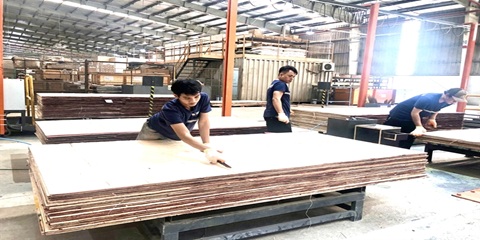
HCM CITY SAYS HOW IT PLANS TO ACHIEVE 10-11% ANNUAL EXPORT GROWTH FOR REST OF DECADE
The southern economic hub aims to strengthen its role as the country’s largest import-export centre while developing into a regional transhipment centre in Southeast Asia, supported by green and digital transformation and a circular economy. HCM City has outlined measures to expand production capacity, cut logistics costs, diversify export markets, and help businesses meet increasingly stringent international standards as it targets average annual export growth of 10-11 per cent through 2030.
VIETNAM ECONOMY INVESTMENT
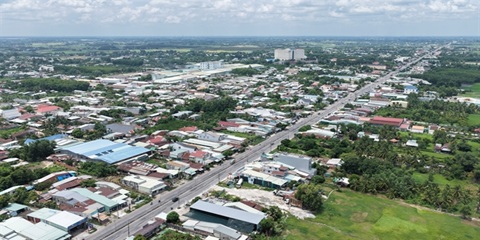
HCM CITY LEADS ECONOMIC RESTRUCTURING IN SOUTHEAST REGION
According to Associate Professor, Dr Vũ Tuấn Hưng, director of the Institute of Social Sciences of the Southern Region, the Southeast is a strategically important socio-economic space in Việt Nam’s development given its advantages in location, industry, trade, services, logistics, science and technology, urbanisation and human resources.
TECHNOLOGY
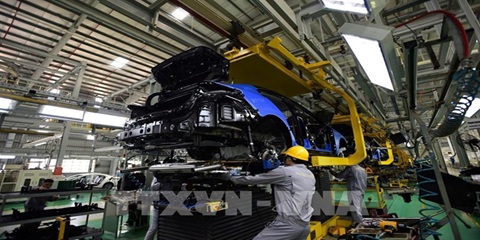
DIGITAL TRANSFORMATION TURNED INTO PRACTICAL TOOLS FOR PEOPLE, BUSINESSES
Việt Nam is moving its digital transformation agenda beyond policy frameworks and individual technology platforms towards practical applications that address everyday needs, as authorities seek measurable outcomes from science, technology and innovation. Under Politburo Resolution No. 57-NQ/TW issued on December 22, 2024, the implementation is increasingly shifting from simply completing assigned tasks towards developing concrete products and services for citizens and businesses.

TECHNOLOGY
APPLYING TECHNOLOGY FOR ECONOMIC TRANSFORMATION
Having completed its new rural development program, Hanoi is shifting its focus toward improving development quality and building smart, sustainable rural areas. The transformation of Dong La orchid-growing village in An Khanh, a western commune of Hanoi, shows how digital technology is becoming a driver of production, market expansion, and higher incomes for local residents.
MEMBER CORNER / PROMOTIONS
VIGLACERA HONORED AS THE "LEADING GREEN INDUSTRIAL REAL ESTATE DEVELOPER 2026"
Organized by the Vietnam Investment Review, this prestigious awards program recognizes industry pioneers advancing eco-industrial parks, clean energy transition, and rigorous ESG standards. Outperforming competitors through a rigorous evaluation, Viglacera Corporation – JSC proudly ranked among the Top 5 highest-positioned enterprises in the Leading Green Industrial Real Estate Developers 2026 category, reinforcing its premier position in Vietnam’s industrial real estate sector.
Events Sponsors






















